
Can't Stick to a Budget? 5 Reasons Budgeting Fails and How to Keep Going
Updated
If you keep giving up on budgeting, the problem is usually the method, not your willpower. Here are 5 reasons budgets fail, and what to do instead.
You decide to start tracking your spending, and a week later you have quietly stopped. Sound familiar? Giving up on a budget is incredibly common. And in most cases, the problem is not a lack of willpower. It is that the method was too demanding from the start.
This guide breaks down the 5 most common reasons budgeting fails, and how to avoid each one. In the second half, we also look at choosing between pen and paper and an app, ways to make logging faster, and how to make budgeting something you actually enjoy.
Reason 1: Too many categories
You start strong and split groceries into "produce", "meat", "snacks", "drinks" and "household". This is the most common way budgets fall apart. Every trip to the store now means sorting one receipt into five buckets. Even at 3 minutes a time, four shops a week adds up to almost an hour a month. Very few people keep that up.
The point of a budget is not a perfect record. It is to understand where your money goes, so you can change what you do next. Knowing roughly how much you spend on groceries each month is enough for most decisions.
Start with around 10 categories. If you later want more detail somewhere, you can split a category then. Merging categories you split too finely is much more work.
Reason 2: Trying to match every cent
Your receipts and the cash in your wallet are $3 apart, and you spend half an hour hunting for it. This is another classic way to burn out. A personal budget is not accounting. It does not need to balance to the cent.
If you are off by a few dollars, just log it as "miscellaneous" and move on. If the gap is large every month, that is the time to look into it. The moment you aim for perfection, budgeting turns into a chore.
Reason 3: No set time to log
"I'll log it when I remember" usually means "I won't log it". We rarely do things we have not planned. On the other hand, attaching a new habit to one you already have makes it stick surprisingly well.
- Log a purchase right after you walk out of the store
- Log the day's spending after you brush your teeth at night
- Clear out the receipts in your wallet when you sit down on the bus or train
Pick just one. What matters is deciding when you will do it. A task without a set time forces your brain to decide "now or later?" every single time, and those small decisions are what make it feel like a hassle.
Reason 4: Looking back only to feel guilty
You open your budget at the end of the month and think "I overspent again". Repeat that enough and you start avoiding the app altogether. Nobody keeps up with something that makes them feel bad every time they open it.
Try changing why you look back, from judging to discovering. Instead of blaming yourself, look for facts: "my phone bill is bigger than I thought", "I only ate out twice this month". Once you know the facts, the next thing to change becomes obvious.
Cutting fixed costs (phone plan, insurance, subscriptions) usually pays off for longer than cutting variable costs (groceries, household items). Change a fixed cost once and it keeps saving you money every month without any extra effort.
Reason 5: Trying to fill in every single day
You missed three days, so this month is "ruined" and you will start again next month. This way of thinking stops more budgets than anything else.
Just leave the missing days blank. A budget is useful even with gaps. Even if you miss three days, the other 27 days still show your patterns clearly. Deciding from the start that "it's fine to skip a day and pick it up again" leads to far more records in the long run.
The mindset that keeps you going
All five reasons have one thing in common: the more precise you try to be, the harder it is to keep going. The value of a budget is in consistency, not accuracy. A rough record kept for a year will tell you much more than a perfect one that lasts two weeks.
| What makes budgets fail | What keeps them going |
|---|---|
| Lots of detailed categories | Start with about 10 categories |
| Matching every cent | Log small gaps as miscellaneous |
| Logging "when I remember" | Attach logging to an existing habit |
| Looking back to feel guilty | Looking back to discover facts |
| Starting over after missing days | Leave missed days blank and keep going |
Pen and paper, spreadsheet or app?
Some people swear by writing things down, others prefer an app. Both work. What matters is choosing the method where logging feels the least like work for you.
| Method | Good for | Where people tend to give up |
|---|---|---|
| Notebook | People who enjoy writing and have a set time each day | You do all the totals yourself, and it is hard to carry around |
| Spreadsheet | People who like building their own tables and charts | Hard to enter on a phone, so entries pile up |
| Budgeting app | People who want to log in spare moments and let the app do the math | Apps with too many features can be exhausting to set up |
If you gave up on paper before, the math and carrying it around may have been the problem. If you gave up on an app, it may have been too complicated. Trying the opposite of whatever failed last time is a good place to start.
3 ways to make logging faster
The number one reason people give for quitting is "logging is a pain". Make the logging itself smaller, and sticking with it gets much easier.
Just snap a photo of the receipt
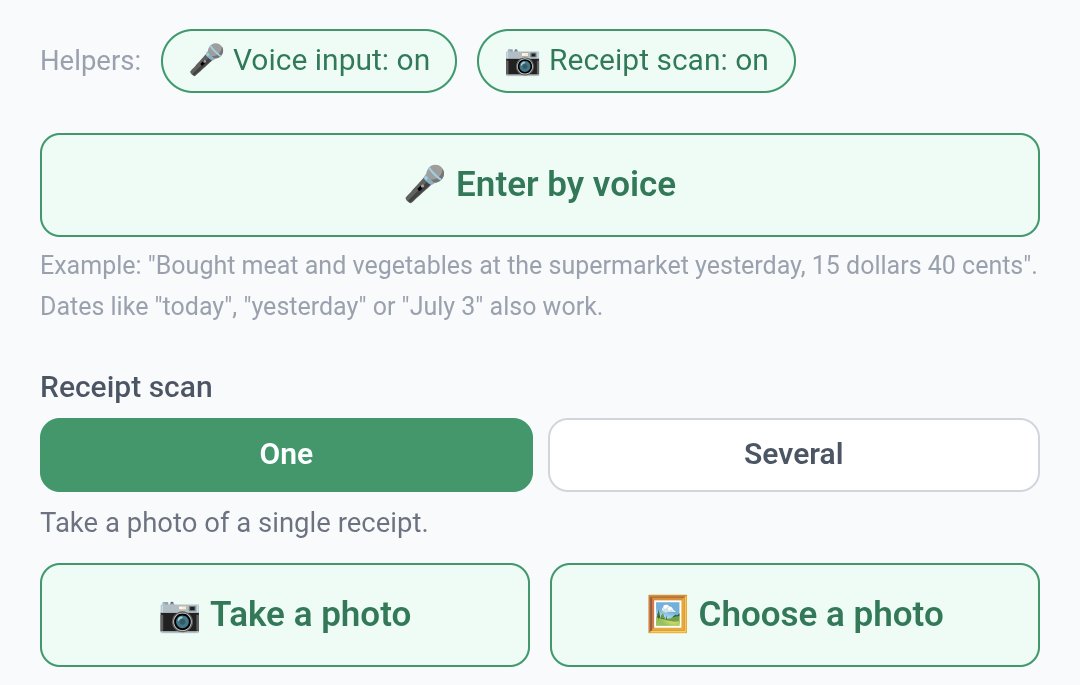
Typing in every amount and store name from a receipt is the slowest part of budgeting. With an app that reads receipts from a photo, logging takes a few seconds.
Log by voice
If you can just say "Spent $12 on lunch yesterday" and have it recorded, you can log while you walk. Make it a habit to say it before you put your wallet away, and you will rarely forget.
Set up recurring expenses once
Rent, phone bills, subscriptions: anything you pay every month can be set up once and logged automatically after that. Then the only things you need to log day to day are variable costs like groceries and household items.
Make budgeting fun
We stick with things that reward us right away. The real rewards of budgeting (saving money, understanding your habits) take months to show up, so having a few small rewards along the way makes it much easier to keep going.
- Pick a small treat for yourself, like a favorite snack after a full week of logging
- Mark each day you log on a calendar so you can see your streak
- Use an app that turns logging into a game, with points or items for each entry
Log your spending, feed your pet
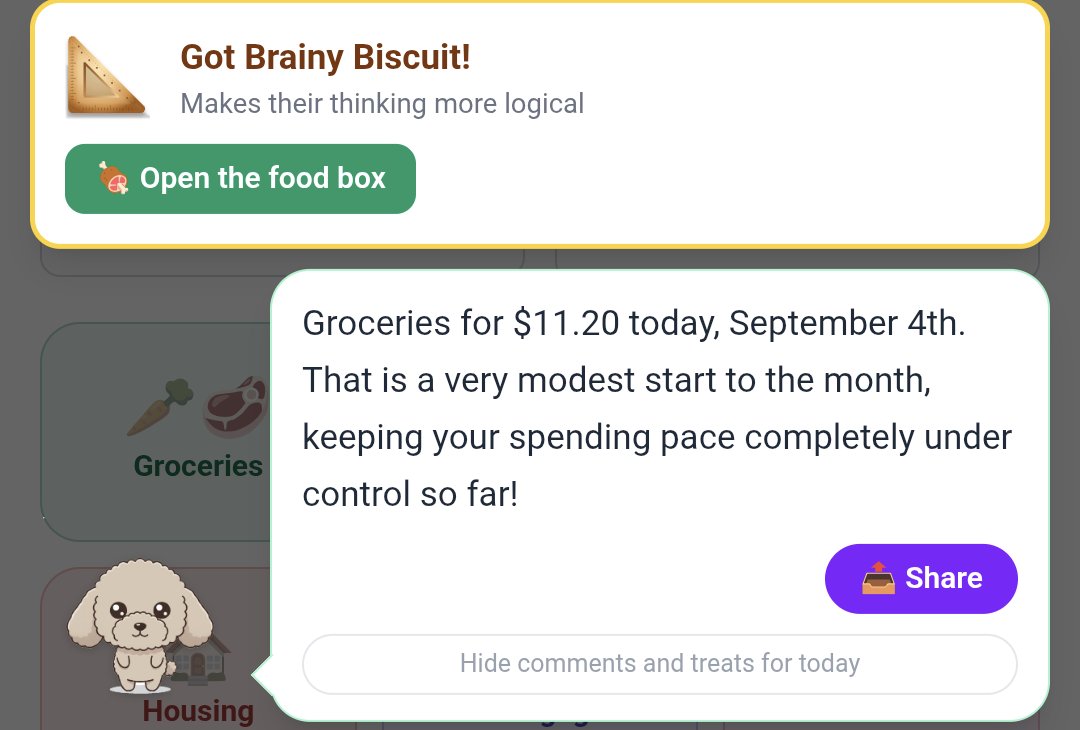
Moneypet is a budgeting app built around exactly this idea of making budgeting fun. Every time you log an expense, you earn food for your pet, and your pet reacts to what you logged with a comment of its own.
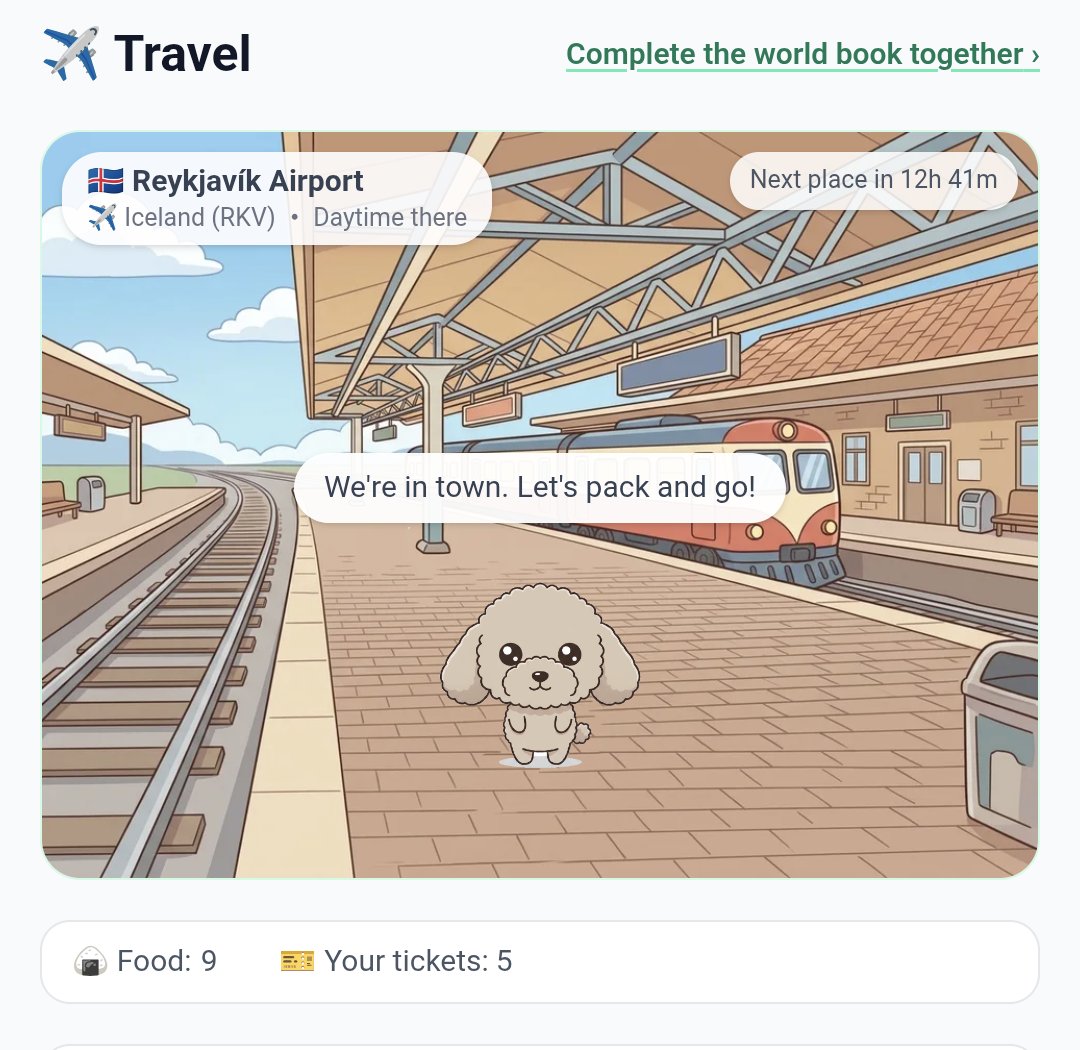
Send your pet around the world (Travel mode)
Use your food to send your pet traveling. Starting from airports and ports around the world, your pet visits famous places and collects the scenery in a picture book. Your pet even sends you letters from the road, so there is always a reason to open the app.
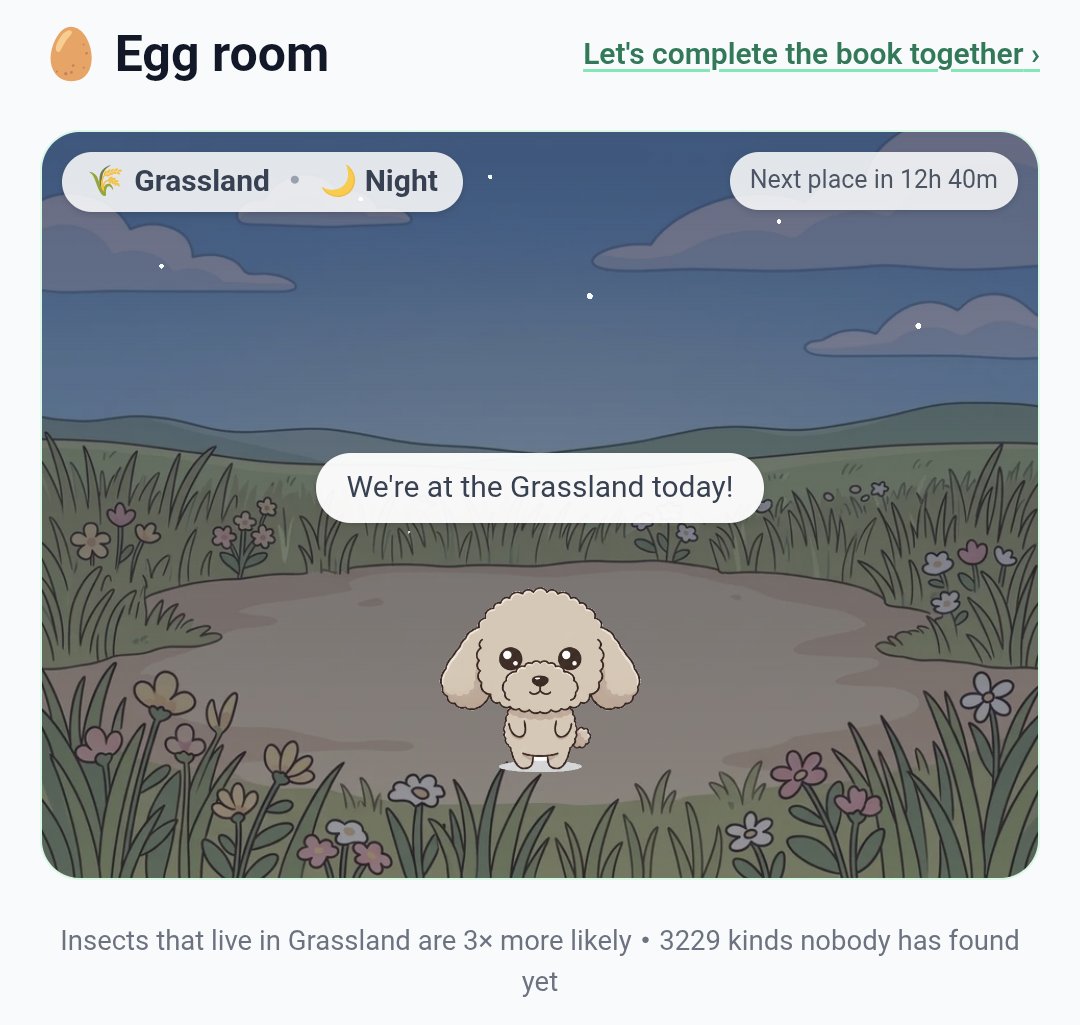
Find eggs and collect insects (Egg mode)
Your pet searches for eggs in a place that changes every day, like grasslands or forests. Thousands of different insects can hatch, and you never know which one you will get until it does.
Chat with your pet
In the pet room, you can chat freely with your pet. Your pet remembers what you talked about, so you can pick up the conversation next time.
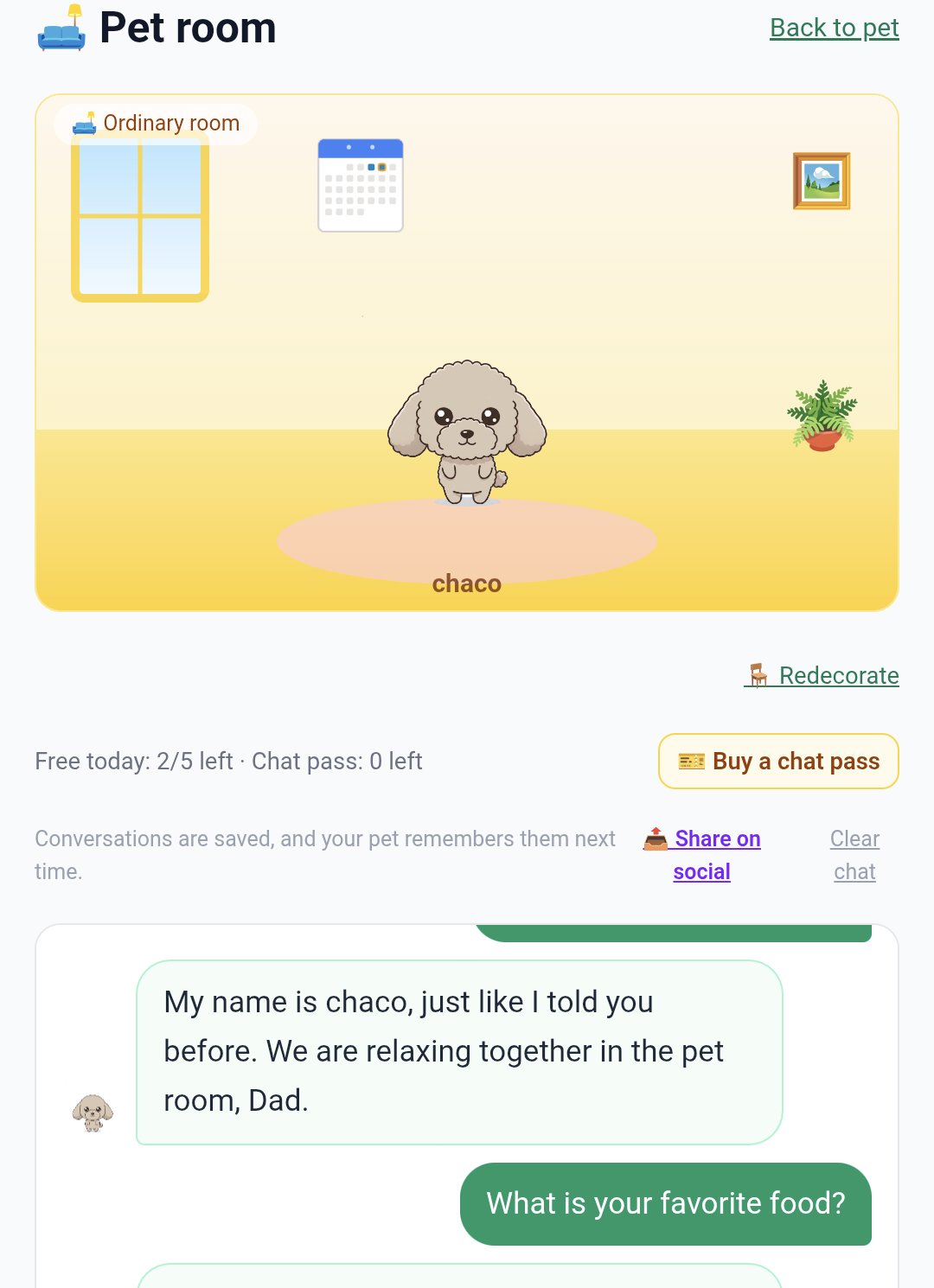
Play with your pet, and before you know it, you have been budgeting for weeks. It is made for people who have never managed to stick with a budget before.
Moneypet helps with the hardest part of budgeting: keeping it up. Log your spending to earn food for your pet, and enjoy travel and egg hunting that make you want to open it every day.
Frequently asked questions
How long does it take to make budgeting a habit?
It varies a lot from person to person. A study from University College London found that new behaviors took about 2 months (66 days) on average to become automatic, and that missing a single day had little effect on forming the habit. So do not worry about missed days. Aim for about two months.
I have given up many times. What should I do?
Make the goal as small as possible, like "log just one thing a day". Trying to log everything is a heavy load. Logging only your biggest purchase, or only groceries, is still useful. Once it feels easy, widen the scope little by little.
How can we budget together as a family?
Sharing one budget with your partner or family can keep everyone motivated, since you see each other's entries. But if it becomes a tool for criticizing each other's spending, it will not last.
Summary
Whatever tool you use, the most important thing is finding a way you can keep up. Paper, a spreadsheet or an app can all work.
- Keep categories few, and don't chase every cent
- Decide when you will log, and don't worry about missed days
- Make logging easy, and give yourself small rewards
Avoid these 5 pitfalls and find one small thing you enjoy, and your chances of sticking with a budget go up dramatically.
Moneypet is a budgeting app where logging your spending earns food for your pet. Send your pet traveling and hatch insects from eggs, so you actually want to open it every day. Free to start.